
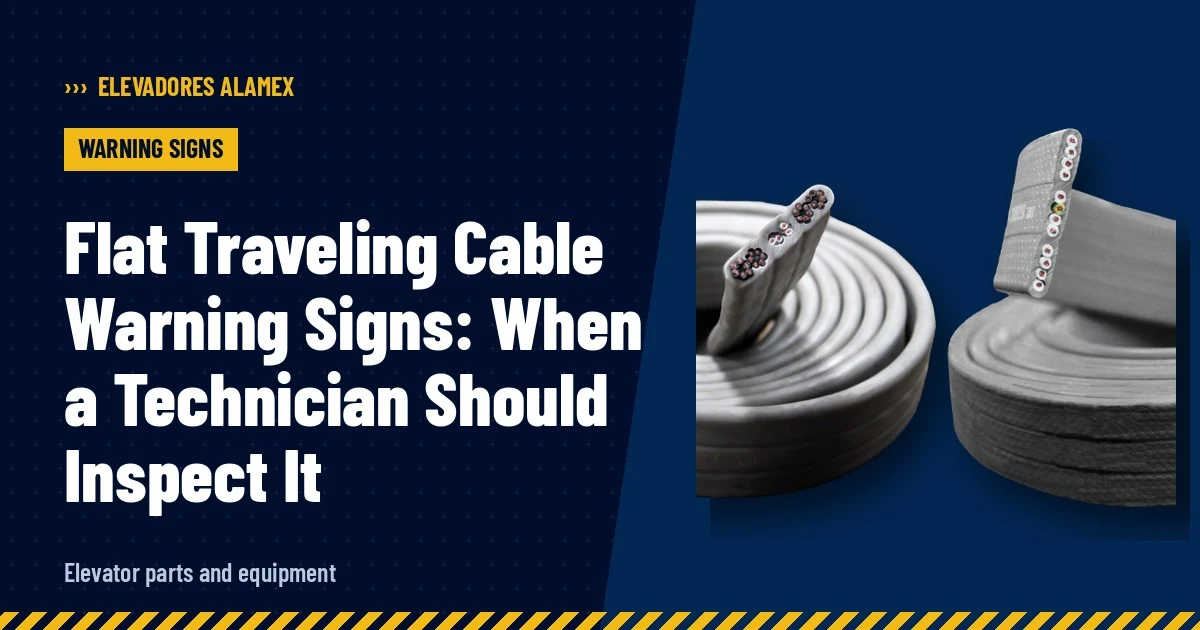
The flat traveling cable transmits all signals between the car and the control panel. When it fails, the elevator shows erratic behavior: buttons that do not respond or flickering indicators. Here you will see the two important replacement signals, what they mean, and why they matter. If you detect any of them, ask a qualified technician to inspect it.
›››What the Flat Traveling Cable Is and Why It Matters
The flat traveling cable is the set of conductors that carries signals from buttons, indicators, and other car elements to the control panel. It comes in versions of 12, 24, 36, and 48 conductors of 0.75 mm² and rated voltage 300/500 V.
The flat format allows for neat arrangement in the hoistway and reduces tangling. Choosing the number of conductors depends on the signals the elevator requires.
- Available formats: 12×0.75 mm²; 24×0.75 mm²; 36×0.75 mm²; 48×0.75 mm².
- Rated voltage: 300/500 V.
- Advantage of flat format: neat arrangement.
›››Signal 1: Damaged, Cut, or Crushed Insulation
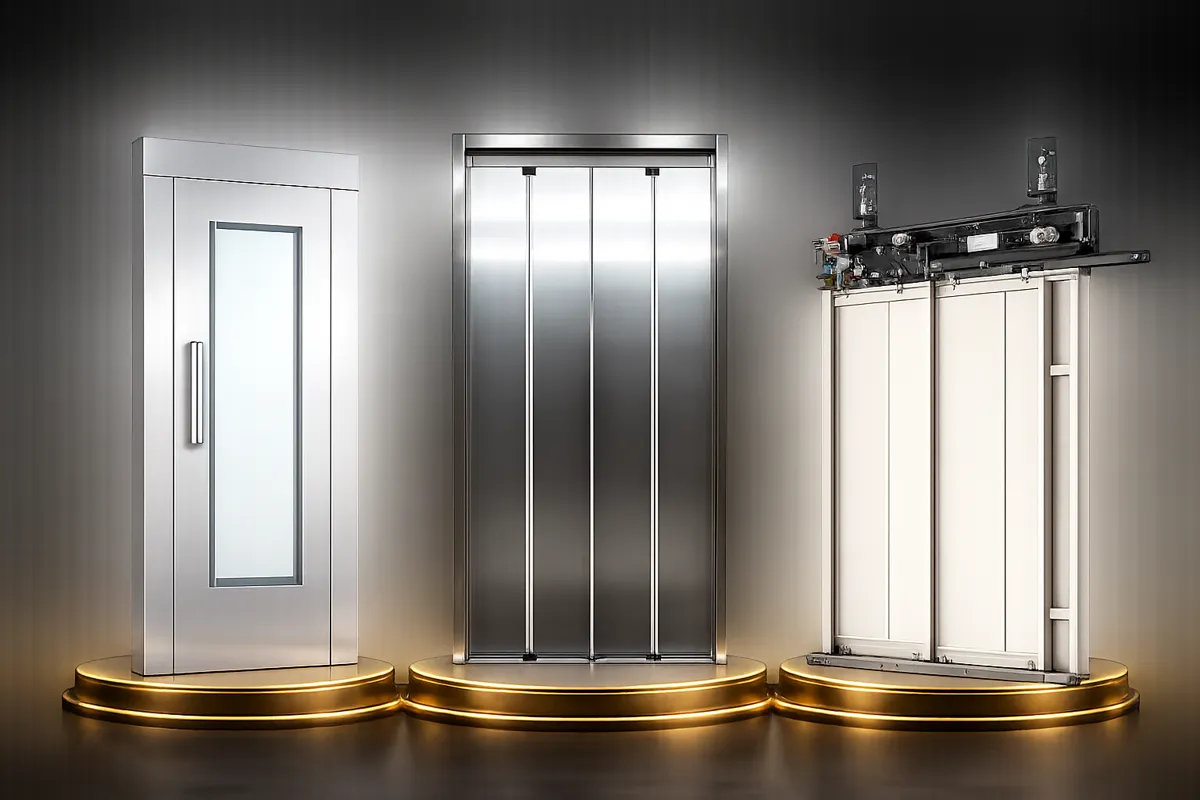
What you see: physical insulation with cuts, peeling, crushing marks, or areas where conductors are exposed. Sometimes a burnt smell is noticed if the damage allowed arcing or heating.
Why it matters: insulation protects each conductor. If it breaks, there is risk of short circuits between wires, signal interference, or permanent control circuit failures. An exposed conductor can also suffer corrosion from moisture inside the hoistway.
What it can cause in the elevator: constant interruptions of car functions, failures in indicators, or loss of communication with the control panel.
- Visually inspect the entire length of the traveling cable along its route.
- Check zones where the cable passes through pulleys, fasteners, and friction points where insulation damage usually occurs.
- If damage is detected, ask a qualified technician to perform replacement or repair.
›››Signal 2: Intermittent Failures in Buttons, Indicators, or Car Signals
What you see: random button presses that do not respond, floor lights that flicker, or functions that appear and disappear without a clear pattern.
Why it matters: intermittency usually indicates partial loss of continuity in one or more conductors. Even if insulation appears intact, an internally broken wire or intermittent connection can cause these symptoms.
Operational consequences: intermittent failures complicate remote control diagnostics and can cause the elevator to behave unexpectedly, affecting user experience and safe operation.
- Check whether failures coincide with car movements (indicating stress points).
- Inspect connectors and splices in the car and control panel, where intermittent failures often occur.
- If intermittency persists, ask a qualified technician to test continuity and inspect the traveling cable.
›››How to Choose the Right Version and What to Check Before Replacing

Select the number of conductors based on the signals the car needs. Options include 12, 24, 36, and 48 conductors of 0.75 mm²; the 48-conductor version has an expanded temperature range.
Before changing the cable, a technician should verify continuity, condition of splices, and fastening points. They should also evaluate the route and pulleys to prevent the new cable from suffering the same damage.
- Available versions: 12×0.75 mm²; 24×0.75 mm²; 36×0.75 mm²; 48×0.75 mm².
- Operating temperature: varies by variant (for example, -15ºC~70ºC in the 48-conductor version).
- Consider related accessories such as the Flat Traveling Cable Carrier for maintenance tasks.
›››Frequently asked questions
Can I test the cable myself?
You can perform a visual inspection, but electrical testing and replacement must be done by qualified technicians.
Which version do I need if I want more signals in the car?
Choose the number of conductors that covers the required signals: there are versions of 12, 24, 36, and 48 conductors of 0.75 mm².
If you detect any of these signals, ask a qualified technician to inspect the flat traveling cable and determine if replacement is needed. Among the spare parts most requested for this work are the Traveling Cable (sold by the meter) and the Flat Traveling Cable Carrier. Get a quote for your project in the store or write to an advisor.