An overspeed governor is part of the safety system that prevents excessive speed in the car. When choosing one you must compare concrete data: pulley diameter, compatible cable Ø, nominal speed, pulley type (top/bottom/tensioning), voltage/tension and whether the equipment is bidirectional or for MRL/MR. In this article you will learn what each piece of data means, what to ask your technician and what information to have on hand to request a quote without errors.
›››1) Pulley Diameter: Why It Matters and How to Verify It
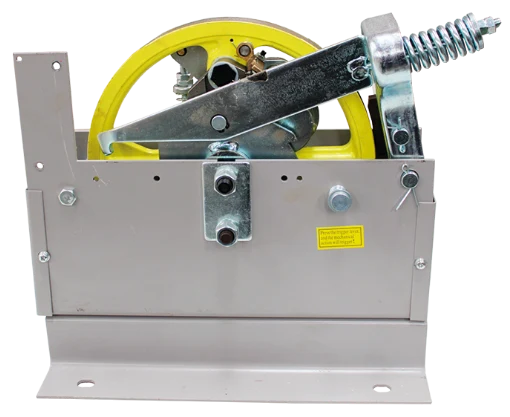
The pulley diameter determines the relationship between the governor cable speed and the angular speed of the assembly. To choose, you must compare exactly the pulley Ø that your system requires with the pulley Ø of the spare part. In our options you see pulleys of 240 mm, 250 mm, 300 mm and 315 mm; each one corresponds to different variants and specific uses.
What to review with your technician: ask them to measure the diameter of the installed pulley (in mm) and confirm whether the current governor is top pulley, bottom pulley or tensioning pulley. That information prevents mechanical incompatibilities and forced couplings.
What to ask when quoting: request exact pulley Ø match and confirm whether the spare part includes only the pulley or the complete assembly. Bring photos and the part reference if you have it.
Example with Alamex spare parts: the MR-ALAMXS3 model includes a 240 mm pulley. MR versions offer pulley Ø of 250 mm and 300 mm; MRL versions of 250 mm, 300 mm and 315 mm depending on the variant. Discuss these numbers with your technician before deciding.
- Measure the current Ø in mm.
- Confirm type: top/bottom/tensioning pulley.
- Ask if the part is pulley only or complete assembly.
›››2) Compatible Cable Ø: Do Not Assume
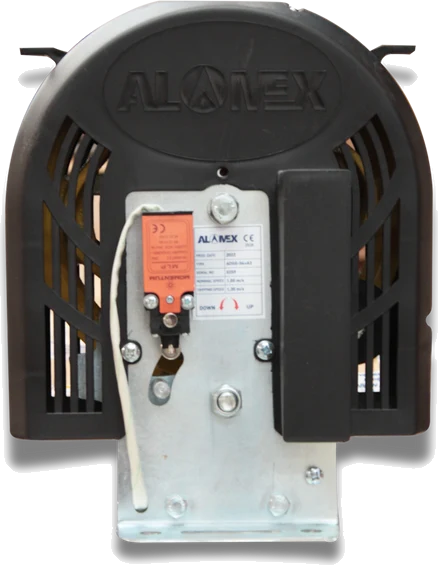
The diameter of the cable working in the governor must match the compatible cable Ø of the spare part. In Alamex options compatibility appears for "6.5 / 6.8 mm" and for "8 mm"; using a different cable affects the grip and winding on the pulley.
What to review with your technician: measure the Ø of the governor cable in the machinery (in mm) and verify wear or thinning. If the cable is out of tolerance, consider replacing it along with the governor.
What to ask when quoting: confirm that the spare part indicates the "compatible cable Ø" and that it matches yours. If your system uses 8 mm, for example, do not request a part compatible only with 6.5 / 6.8 mm.
Illustrative Alamex options: the MR and MRL models list "compatible cable Ø: 6.5 / 6.8 mm"; the MR-ALAMXS3 specifies "cable Ø: 8 mm". That difference determines which version to request.
- Measure the cable in mm.
- If the cable is worn, replace it with the governor.
- Confirm compatibility before quoting.
›››3) Nominal Speed and Trip Speed: How They Influence the Choice
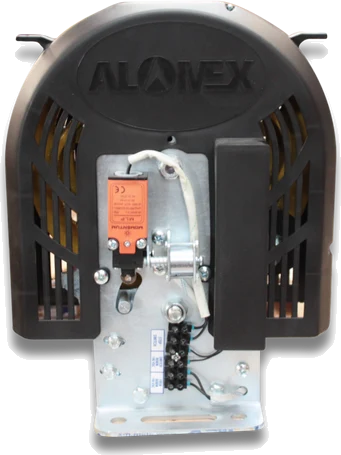
The nominal speed of the elevator and the speed at which the governor trips are key data. Some spare parts indicate the "Nominal Speed" and others add the "Trip Speed" (electrical or mechanical). You must ensure that the part is suitable for the speed of your system.
What to review with your technician: confirm the nominal operating speed of the elevator (m/s) and whether the installed governor is for 1.0 m/s, 1.6 m/s, 2.0 m/s or other. Also ask whether the existing governor has a known trip speed for testing.
What to ask when quoting: request a match between the "Nominal Speed" of the elevator and that of the spare part. If the part indicates trip speeds, verify that those figures are compatible with the safety test criteria of your technician.
Examples from the products: some MR and MRL variants indicate nominal speeds such as "1.0 m/s", "1.6 m/s / 2 m/s", "2.0 m/s". The MR-ALAMXS3 details "Electrical Trip Speed: 1.26 m/s" and "Mechanical Trip Speed: 1.37 m/s"; the MRL 31.5 top lists "Trip Speed: 2.55 m/s". Use that data to match with the speed of your elevator.
- Confirm the nominal speed of the elevator (m/s).
- Check the trip speed if specified.
- Do not change the nominal category of the governor.
›››4) Governor Type: MR vs MRL and Bidirectionality
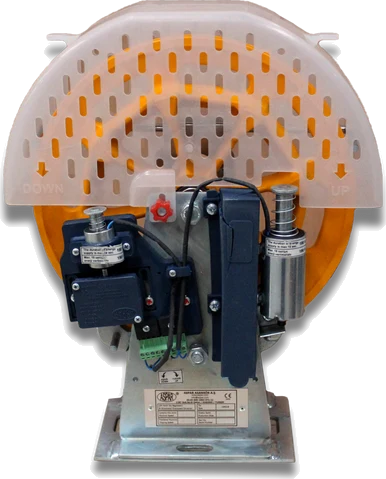
Differentiating MR and MRL is important: some spare parts are designed for elevators with a machine room (MR) and others for those without a machine room (MRL). There are also bidirectional governors that act on both up and down.
What to review with your technician: confirm whether your installation is MR or MRL. Also verify whether the current governor needs to be bidirectional or only acts in one direction. This determines the equipment selection.
What to ask when quoting: clarify the subcategory of the part (for example, "MR (with machine room)" or "MRL (without machine room)") and whether the part is bidirectional. If your installation is MRL, request models designed for MRL.
Related Alamex options: there are models cataloged as "MR (with machine room)" and "MRL (without machine room)". An example with additional specification is the "MRL 31.5 cm Overspeed Governor (top pulley)" which indicates "Operation: Bidirectional" and "Nominal Speed: 2 m/s". Those details help you choose the correct version.
- Define whether your elevator is MR or MRL.
- Verify if you need bidirectionality.
- Request the exact subcategory when quoting.
›››5) Operating Voltage / Tension: Confirm Electrical Compatibility
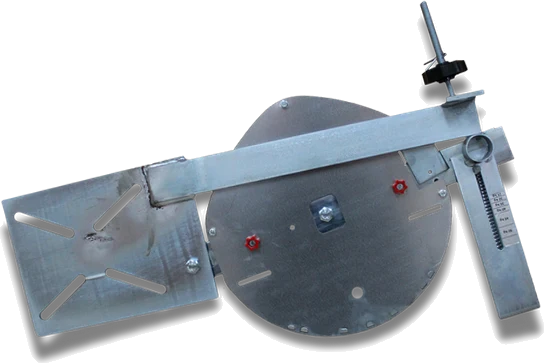
The operating voltage or tension of the governor must match that of your control system. In Alamex spare parts you will find electrical references such as "190 VDC" or "190/220 V"; do not assume them: verify with your technician the exact type of power supply.
What to review with your technician: ask them to measure or confirm the power supply of the system where the governor is connected (VDC or V). Not all governors use the same voltage; an electrical mismatch can prevent proper operation of the trip mechanism.
What to ask when quoting: request the specification of "Operating Voltage" or "Tension" of the spare part and compare it with that of your system. If the spare part indicates "190 VDC", confirm that your system has that power supply.
Cases in Alamex spare parts: several MR and MRL models list "Operating Voltage: 190 VDC" or "Tension: 190/220 V". Provide those numbers to your technician to verify compatibility before purchasing the part.
- Verify if it is VDC or V.
- Confirm the exact figure with your technician.
- Do not connect without verification by qualified personnel.
›››6) Tensioning and Tensioning Force: Where It Matters and When to Ask

Some parts include tensioning force data; others do not. The tensioning force determines how much the governor cable must be tensioned to maintain correct contact with the pulley. For example, the MR-ALAMXS3 specifies "Tensioning Force: 1100 N".
What to review with your technician: ask them to check the current tensioning setup and determine whether the new part requires a different adjustment. If the spare part provides a defined tensioning force, your technician will need to adapt the system to achieve that tension.
What to ask when quoting: request the "Tensioning Force" figure when the spare part specifies it and clarify whether the assembly includes the tensioning mechanism. If not specified, consult with your technician what tensioning method to use.
Practical example: the MR-ALAMXS3 indicates "Tensioning Force: 1100 N" and is for "cable Ø: 8 mm" and "Nominal Speed: 1.0 m/s". That information serves so the technician can adjust the tension correctly during installation.
- Ask for the tensioning force in N if available.
- Adjust tension only with a qualified technician.
- Verify whether the tensioner is included.
›››7) What Documents and Photos to Bring When Requesting a Quote
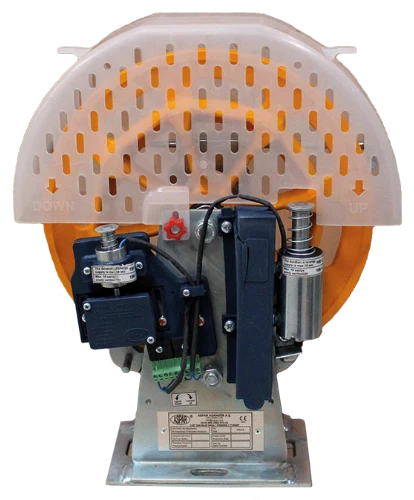
To speed up the quote and avoid errors, prepare accurate information. Bring clear photos of the installed governor (general view and detail of pulley and cable), the measurement in mm of the pulley diameter, the cable Ø in mm, the nominal speed of the elevator (m/s) and the electrical voltage of the circuit where the governor is powered.
Also include the reference or name of the part if you know it. Among the spare parts most requested by technicians is "MR Overspeed Governor 1 m/s 240 Φ 6 mm (ALAM-240B)"; naming known parts facilitates identification.
What to ask the supplier/technician when quoting: ask whether the spare part includes pulley, tensioner or both; whether it requires additional parts (anchors, cables) and whether there are variants for top or bottom pulley. Also clarify compatibility with "6.5 / 6.8 mm" or "8 mm" cables depending on your case.
Remember: do not make interventions without proper training. Any measurement, tensioning or change must be done by a qualified technician. If you have doubts, ask the technician to make a list of parts needed for complete replacement.
- Photos: general and pulley/cable details.
- Measurements: pulley Ø and cable Ø in mm.
- Nominal speed (m/s) and circuit voltage.
›››Frequently asked questions
How do I know if I need a top pulley or bottom pulley?
Review the location of the governor in your installation and take photos. A qualified technician will confirm whether your system uses a top or bottom pulley and will direct you to the corresponding spare part.
Can I replace an MR governor with an MRL governor?
It is not advisable to assume the change without analysis: MR and MRL are designed for different configurations. Consult with your technician and provide the elevator information to determine the correct option.
What do I do if the cable does not match the available spare part?
If the cable Ø does not match, do not adjust it yourself. Ask a technician to evaluate replacing the cable or recommend the spare part compatible with the current cable diameter.
What is the advantage of a bidirectional governor?
A bidirectional governor acts on both up and down; its usefulness depends on the elevator configuration. Your technician will tell you whether your installation requires bidirectionality.
Now you know what data to compare and what to ask your technician before requesting a quote. Gather measurements (pulley Ø and cable Ø), nominal speed and voltage, take photos and ask a qualified technician to validate the information to quote the correct spare part in the store or so that an advisor can guide you on the right option.