The gearless traction machine is the motor that moves your elevator without using a geared reducer. In this article you will learn, without unnecessary technical jargon, what this machine is, which technical data matter, and how to verify if it is right for your equipment. We will also tell you what information to prepare before requesting a quote and what inspections to ask your qualified technician to perform.
›››1) What Is the Gearless Traction Machine 450 kg / 630 kg and Where Does It Go?
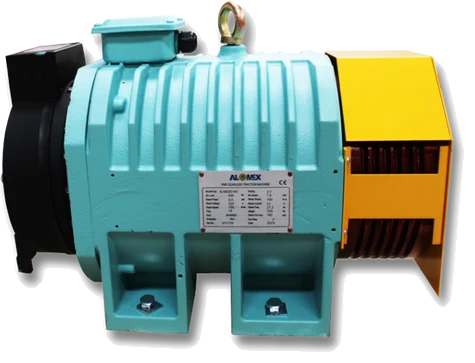
The gearless traction machine is the element that drives the elevator car. It is installed in the machine room or at the top of the hoistway, depending on the design. Unlike machines with a reducer, this one has no gears: the motor rotor directly drives the traction sheave.
In small or medium-sized buildings these machines are common because they have fewer moving parts and offer a smoother ride. The machine we describe comes in two nominal capacities: 450 kg and 630 kg. Both variants share the same speed and sheave diameter, but differ in power, number of grooves, and cable diameter.
If you are in charge of building management, locating the machine helps you plan the technical intervention and coordinate access for its replacement or modernization. A qualified technician must perform all handling.
- Installation: machine room or top of hoistway
- Design: gearless motor (no gears)
- Available capacities: 450 kg and 630 kg
›››2) What Each Visible Component Does and Why It Matters
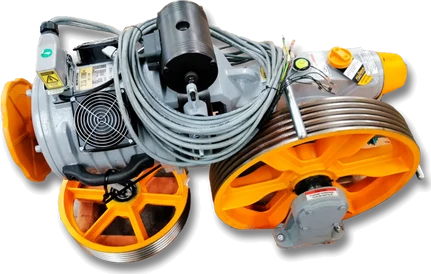
Traction Sheave: transmits motion to the cables. The diameter influences ride stability; for this machine the sheave is 240 mm. The grooves in the sheave guide the cables and prevent them from slipping.
Rotor and Stator (gearless motor): these generate the torque. The motor power tells you how much force it can sustain: the 450 kg version has 3 kW and the 630 kg version has 4.3 kW.
Fasteners and Housing: ensure the machine is aligned with the guides and cable support. Correct mounting prevents vibration and premature wear.
Cables and Cable Diameter: the cable diameter must match the sheave grooves. Here the variants indicate cable diameters of 6.5 mm (450 kg) and 8 mm (630 kg). Your technician will confirm compatibility with the installed cables.
- Sheave Ø: 240 mm
- Number of Grooves: 6 (450 kg) / 7 (630 kg)
- Cable Diameter: 6.5 mm (450 kg) / 8 mm (630 kg)
›››3) Practical Meaning of Electrical Data
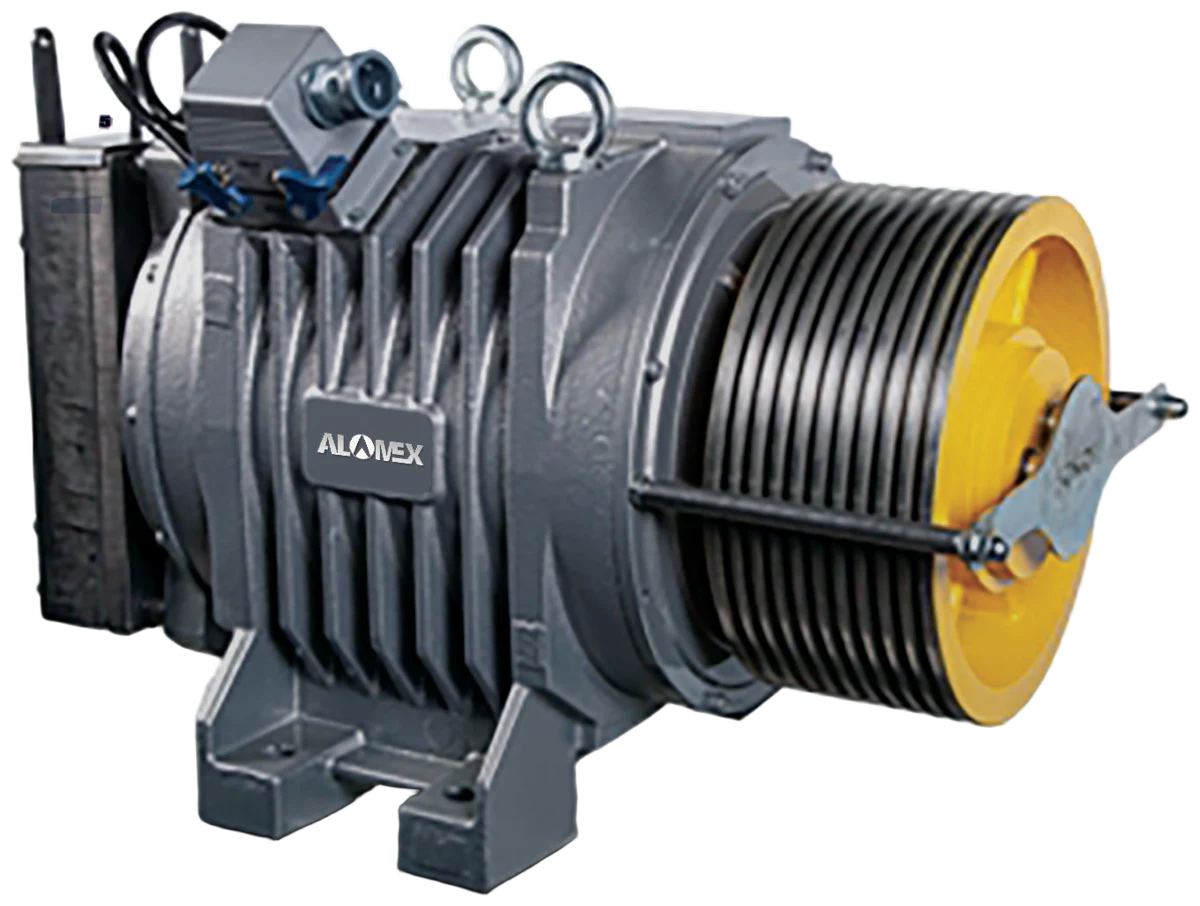
Voltage: indicates the electrical power the machine needs. This gearless operates at 220 V, which makes it easy to connect in residential or commercial electrical systems that do not have 380 V three-phase power.
Current: indicates the intensity demanded during nominal operation. The 450 kg variant shows 13 A and the 630 kg shows 16 A; these numbers help verify that the panel and power supply have adequate capacity.
Power: power in kW (3 kW or 4.3 kW) describes the motor's capacity to move the nominal load at the established speed. The power must match the elevator's load and travel requirements to avoid overstressing.
Speed: both variants operate at 1 m/s. The speed combined with power and sheave defines ride performance.
- Voltage: 220 V
- Current: 13 A (450 kg) / 16 A (630 kg)
- Power: 3 kW (450 kg) / 4.3 kW (630 kg)
- Speed: 1 m/s
›››4) How to Choose Between the 450 kg and 630 kg Variant
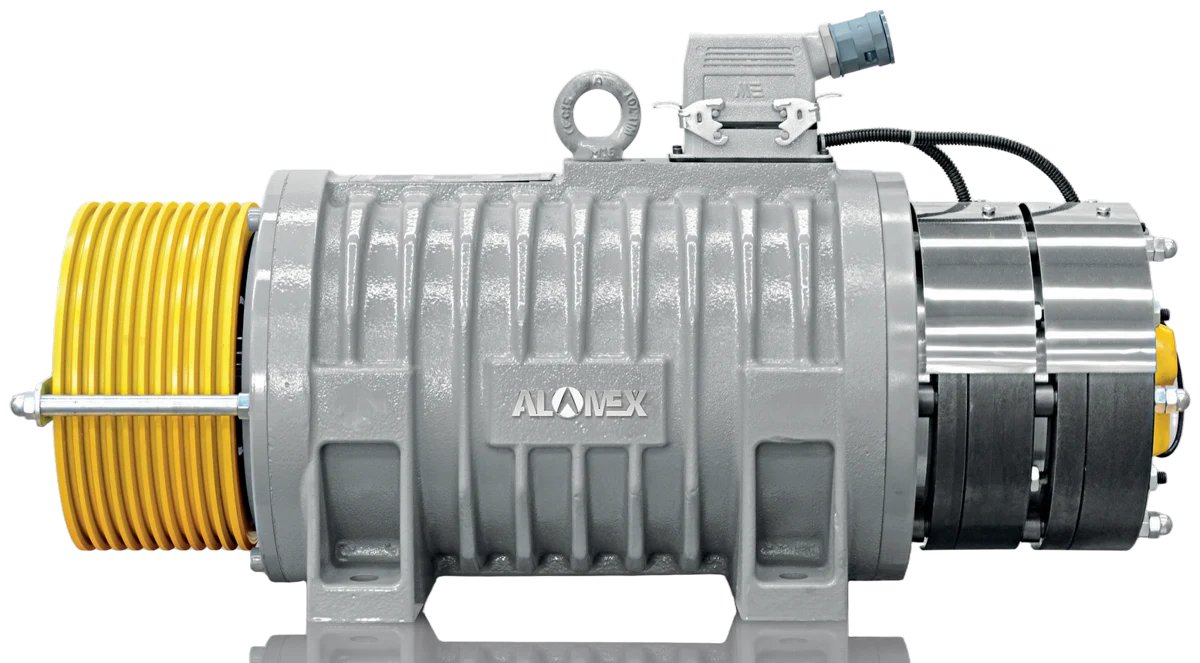
 See Gearless Traction Machine 630 kg 1 m/s 4 kW ›
The choice is based on your elevator's nominal load and the existing cables and sheave. The 450 kg variant shows Power: 3 kW and Cable Diameter: 6.5 mm. The 630 kg shows Power: 4.3 kW and Cable Diameter: 8 mm. If your elevator has a load capacity near 630 kg or uses thicker cables, the higher power variant will be appropriate.
Ask your technician to confirm the number of grooves and cable diameter installed: this machine uses 6 grooves in the 450 kg version and 7 grooves in the 630 kg version. Changing the sheave or groove configuration may be necessary if the cables do not match.
Also consider that both variants share a speed of 1 m/s and a Sheave Ø of 240 mm; thus, if your elevator already has a 240 mm sheave and is designed for 1 m/s, adaptation is usually more straightforward.
- Compare Power and Cable Diameter
- Verify Number of Grooves
- Confirm Speed and existing Sheave Ø
›››5) Visible and Operational Signs Indicating Inspection or Replacement
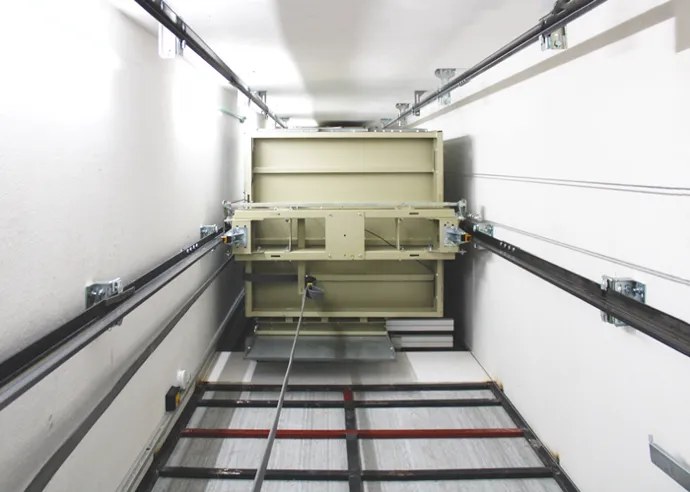
Noise or Vibration: if the ride has unusual noise or vibrations request inspection. In the gearless, vibrations can indicate misalignment, groove wear, or motor problems.
Overheating: a motor that gets excessively hot needs diagnosis. This symptom can originate from overload or electrical problems; the current values (13 A and 16 A) help detect if there is excess consumption.
Groove Wear: visible wear in the sheave slots requires intervention, because it affects cable grip. Check the condition of the grooves, especially if your machine has 6 or 7 grooves depending on the variant.
Always request a qualified technician to perform tests and measurements; do not attempt to manipulate the machine on your own.
- Unusual noise or vibration
- Frequent overheating
- Visible groove wear
›››6) What Information to Prepare Before Requesting a Quote
 See Gearless Traction Machine 630 kg 1 m/s 4 kW ›
Gather the basic data your technician can confirm on site. For this machine, the most useful information is knowing: the elevator's nominal capacity and the load it typically transports; the diameter and number of current cables; the installed sheave diameter; and the available power supply voltage (220 V).
Specifically, note if your elevator requires a speed of 1 m/s and confirm the 240 mm sheave. Also indicate the cable diameter (6.5 mm or 8 mm) and the number of grooves. With that information you can determine if the 450 kg variant (Power: 3 kW; Current: 13 A; Number of Grooves: 6; Cable Diameter: 6.5 mm) or the 630 kg variant (Power: 4.3 kW; Current: 16 A; Number of Grooves: 7; Cable Diameter: 8 mm) is appropriate.
Mention any space restrictions in the machine room, and if you prefer a gearless solution for its compact design. Among the most requested spare parts are geared machines such as the Geared Traction Machine 800 kg AC ALAMPLUS; if your technician suggests evaluating alternatives, mention it in your inquiry.
- Elevator's nominal capacity
- Sheave diameter: 240 mm
- Cable diameter: 6.5 mm or 8 mm
- Available voltage: 220 V
- Required speed: 1 m/s
›››7) Installation, Modernization, and Compatibility (What to Ask Your Technician)
Installation: replacing the machine requires lifting, alignment, and adjustment of the sheave and cables. Ask your technician for a work plan that includes safe disconnection, verification of anchors, and functional testing with simulated passengers.
Modernization: if the goal is to improve efficiency or reduce noise, the gearless machine is a frequent option. For buildings with 220 V power supply, this gearless operates perfectly at that voltage. Discuss with your technician the advantages and limitations according to your elevator's design.
Compatibility: confirm that the existing sheave is 240 mm or that replacement is considered so it matches the new machine. Also verify the cable diameter and number of grooves to avoid drastic changes in the rope arrangement.
Remember: all work must be performed by a qualified technician. Request technical documentation of the installed machine and a list of tests performed after installation.
- Request work plan and post-installation tests
- Confirm Sheave Ø and number of grooves
- Verify power supply: 220 V
›››Frequently asked questions
What is the difference between gearless and geared?
Gearless does not use a reducer: the motor directly drives the sheave, which reduces moving parts and usually provides smoother rides. A geared machine incorporates a reducer between the motor and sheave.
My elevator has 220 V power supply. Can I use this machine?
Yes. This machine operates at 220 V in both variants, so it is compatible with power supplies in buildings that do not have 380 V three-phase power.
How do I know if I need the 450 kg or 630 kg version?
Confirm your elevator's nominal capacity, cable diameter, and number of grooves. The 450 kg version has Power: 3 kW, Current: 13 A, Number of Grooves: 6, Cable Diameter: 6.5 mm; the 630 kg version has Power: 4.3 kW, Current: 16 A, Number of Grooves: 7, Cable Diameter: 8 mm. Your qualified technician can validate the choice on site.
What preventive inspections should I request from the technician?
Request alignment inspection, review of groove and cable tension, measurement of current during operation, and verification of motor temperature. Also request verification of the 240 mm sheave and functional tests at 1 m/s.
If you already know your elevator's capacity and electrical data, build your quote in the store or write to an advisor who can guide you on the variant that best fits your equipment.